Biggest M65 Pro Rgb Buying Mistakes (And How to Avoid Them)
Shopping for a gaming mouse looks simple until buyers start comparing sensor specs, switch durability, grip styles, button placement, software support, and weight. The M65 Pro RGB has remained a recognizable option in the electronics and PC gaming space because it combines an aluminum frame, adjustable weight system, dedicated sniper button, and a shape aimed at competitive play. Yet many buyers still end up disappointed—not always because the mouse is poor, but because they choose it for the wrong reasons or expect it to solve needs it was never designed to address.
The biggest buying mistakes usually happen when shoppers focus on headline features instead of daily usability. They may see the aggressive styling and assume it suits every hand size, or read about high DPI and conclude that raw sensitivity numbers matter more than tracking consistency. Others buy it for office use, only to discover that a gaming-first design can feel overly specialized for spreadsheet-heavy work. A better purchase decision comes from understanding who the M65 Pro RGB is actually for, where it performs well, and where alternative mouse designs may be more comfortable or practical.
This article examines the most common M65 Pro RGB buying mistakes and explains how to avoid them. It also provides a detailed review of the mouse’s strengths, weaknesses, real-world use cases, and the factors buyers should weigh before spending money.
What the M65 Pro RGB Is Designed to Do
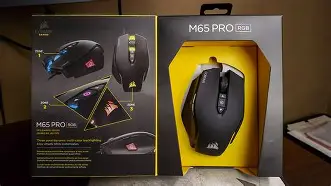
The M65 Pro RGB is a wired gaming mouse built around fast response, precise control, and a shape that emphasizes deliberate hand placement. One of its most notable characteristics is the adjustable weight system, which allows users to tune the feel of the mouse by adding or removing small weights. It also features a high-performance optical sensor, onboard DPI switching, customizable RGB lighting, and a side-mounted sniper button meant to temporarily lower sensitivity for more controlled aiming in first-person shooters.
On paper, those features sound universally appealing. In practice, they are best suited to a specific buyer profile: someone who plays competitive or semi-competitive PC games, prefers a more angular right-handed shell, values wired reliability, and is willing to spend time adjusting settings. That distinction matters because many of the common mistakes come from buying the M65 Pro RGB as a generic “good mouse” instead of evaluating it as a specialized gaming peripheral.
Detailed M65 Pro RGB Review and Analysis
Build Quality and Design
One of the strongest aspects of the M65 Pro RGB is its solid physical construction. The aluminum frame gives it a premium, durable feel that many lightweight plastic mice do not match. Buyers who want electronics that feel substantial in the hand often appreciate that sense of rigidity. The mouse also has a distinct gamer-oriented look, with sharp lines and multiple lighting zones that can be customized in supported software.
That said, premium build does not automatically equal universal comfort. The body shape is more divisive than neutral ergonomic mice. It tends to work better for users who like palm-claw hybrid grips or claw-oriented use, but not everyone will find its contours equally natural during long sessions. Buyers who prioritize all-day comfort over tactical button placement may need to be cautious.
Sensor and Performance
For gaming, the M65 Pro RGB generally earns attention because of its sensor performance. In real-world use, what matters most is not the absolute maximum DPI figure but whether the sensor tracks smoothly, consistently, and predictably across normal sensitivity ranges. For most players, especially those in shooters, MOBAs, and action games, the mouse offers enough precision to support fast flicks, controlled tracking, and quick cursor response.
Where buyers go wrong is assuming that a higher DPI number automatically improves gameplay. Most users never benefit from extremely high settings. In fact, many players perform better at lower and more controlled sensitivity levels. The real advantage here is stable tracking and responsive input, not bragging rights over spec-sheet numbers.
Weight System and Handling
The adjustable weight system is one of the product’s signature features. For some users, this is a real benefit. A player who likes a slightly heavier, grounded feel for tactical aiming can fine-tune the mouse to match personal preference. Someone transitioning from older, heavier gaming mice may also find the system helpful.
However, current trends in gaming peripherals have pushed many buyers toward extremely lightweight mice. Someone expecting a featherlight esports-style mouse may find the M65 Pro RGB heavier and less effortless in rapid movement scenarios. This does not make it bad; it simply means the mouse appeals more to users who value controlled weight and stability over the lightest possible glide.
Buttons and Everyday Usability
The sniper button is a major selling point, but it is also one of the most misunderstood features. In shooters, it can be useful for temporarily lowering DPI during precision aiming moments. In theory, that sounds ideal for players who use sniper rifles or need fine aim adjustments. In reality, the usefulness depends heavily on hand size, grip style, and how naturally the thumb reaches that button.
Some users love it. Others trigger it accidentally or ignore it completely. For productivity tasks, it can be remapped, but that does not always make it a must-have feature. Buyers should think of it as a specialized control option, not a guaranteed advantage.
For general desktop work—editing documents, managing browser tabs, or light creative use—the M65 Pro RGB is fully capable. But its shape, weight, and button layout make it feel more like a performance device than a quiet office companion. People working in shared environments may also care about click feel and noise more than gamers do.
Software and RGB Features
RGB lighting is not a buying priority for everyone, but for users who like synchronized setups, the M65 Pro RGB offers visual customization and profile management. The real functional value of the software is in DPI tuning, button reassignment, and profile storage. Buyers who enjoy tweaking peripherals will likely appreciate that level of control.
Discover deals on Electronics — updated daily.
See Deals →The mistake is paying extra for RGB and customization features that will never be used. If the buyer intends to leave everything on default settings and simply needs reliable pointing performance, a simpler and cheaper mouse may provide better value.
Biggest M65 Pro RGB Buying Mistakes
Mistake #1: Buying It Based Only on Brand Recognition
Many electronics shoppers feel safer with a recognizable gaming brand, and that instinct is understandable. But brand familiarity should never replace fit, comfort, and use-case matching. The M65 Pro RGB has a clear identity, yet it is not automatically the best option for every gamer, student, or office worker.
How to avoid it: Buyers should compare the mouse’s shape, weight class, and feature set against their own habits. A person playing competitive FPS games for several hours a week has different needs from someone using a mouse mostly for browsing and office work.
Mistake #2: Ignoring Hand Size and Grip Style
This is one of the most common and expensive errors in mouse shopping. A mouse can have excellent components and still feel wrong after thirty minutes if the shell shape does not suit the user’s hand. The M65 Pro RGB is not a universally “safe” shape in the way some neutral office mice are.
How to avoid it: Buyers should consider whether they use palm, claw, or fingertip grip, and whether they prefer a fuller back hump or a lower-profile shell. If possible, they should compare dimensions with a mouse they already find comfortable.
Mistake #3: Overvaluing Maximum DPI
Spec sheets can make it seem as if the highest DPI always wins. In reality, consistency, lift-off feel, cursor stability, and comfort matter more. For everyday use, high DPI can even make the pointer harder to control if not properly adjusted.
How to avoid it: Shoppers should focus on sensor reputation and real-world control, not just maximum numbers. They should also remember that good in-game performance usually comes from proper setup, not extreme sensitivity settings.
Mistake #4: Assuming the Sniper Button Is Essential
The sniper button is one of the M65 Pro RGB’s defining features, but not every user benefits from it. Some buyers are drawn to it because it sounds innovative, only to find that they never build it into their play style or that it gets in the way.
How to avoid it: Buyers should ask a practical question: does their game library and thumb positioning actually justify a dedicated temporary DPI shift button? If not, it should be treated as a bonus rather than a deciding factor.
Mistake #5: Forgetting That Wired vs. Wireless Still Matters
The M65 Pro RGB is a wired mouse, and that is not a flaw. For many players, a wired connection still means dependable low-latency performance without battery management. But some buyers now strongly prefer cleaner desk setups and cable-free movement.
How to avoid it: Buyers should think about desk layout, portability, and cable tolerance before purchasing. Someone who dislikes cable drag or moves between workspaces frequently may not be fully satisfied with a wired model, regardless of performance.
Mistake #6: Treating Adjustable Weight as an Automatic Advantage
Adjustable weight is useful only if the buyer genuinely wants to tune the feel of the mouse. Otherwise, it becomes a feature that sounds premium but has little day-to-day value. Some users actually discover they would prefer a naturally lighter mouse instead of a configurable one.
How to avoid it: Buyers should decide whether they like heavier control-oriented mice or lighter fast-glide designs. If they have never adjusted mouse weights before, they should not assume it will transform the experience.
Mistake #7: Expecting One Mouse to Excel Equally at Gaming and Office Use
The M65 Pro RGB can certainly be used for productivity, but it is still a gaming-focused device. Its styling, button layout, and tuning philosophy lean toward performance. Buyers who spend eight hours a day on spreadsheets and only one hour gaming may prioritize comfort, silence, and simpler ergonomics over gaming extras.
Looking for the best Electronics deals on Amazon?
View Offers →How to avoid it: Users should rank their primary use case honestly. If gaming is the main priority, the M65 Pro RGB makes more sense. If work comfort dominates, a more office-oriented mouse may be the better electronics purchase.
Pros and Cons
Pros
- Solid build quality with a premium aluminum frame feel
- Reliable sensor performance suitable for fast-paced gaming
- Adjustable weight system for users who want tuning flexibility
- Dedicated sniper button can be genuinely useful in certain shooter scenarios
- RGB customization and software support for profile-based setup changes
- Wired connection avoids battery concerns and suits low-latency preferences
Cons
- Shape is not universally comfortable for every hand size or grip style
- Heavier feel may not appeal to buyers who prefer ultra-light mice
- Sniper button placement may feel awkward or unnecessary for some users
- Gaming-focused design can feel over-specialized for pure productivity use
- Wired setup may disappoint users who prefer a cleaner wireless desk
M65 Pro RGB at a Glance
| Category | M65 Pro RGB Assessment | Best For | Potential Concern |
|---|---|---|---|
| Build Quality | Strong, premium-feeling, durable chassis | Buyers who value solid construction | May feel less minimal than simpler designs |
| Sensor Performance | Accurate and responsive for gaming | FPS and action gamers | Specs can be overemphasized by casual users |
| Comfort | Good for some right-handed grips, not all | Users comfortable with shaped gaming mice | Grip compatibility varies widely |
| Weight | Configurable and more substantial in feel | Users who like controlled mouse movement | Not ideal for fans of ultra-light mice |
| Extra Controls | Sniper button and programmable functions | Competitive players who use macros or DPI shift | Some users may never use these extras |
| Daily Productivity | Capable, but gaming-first in design | Mixed-use setups with gaming priority | Office-first users may prefer a calmer design |
Real-World Use Cases Buyers Actually Care About
Competitive Shooter Players
This is one of the most logical audiences for the M65 Pro RGB. Players in tactical or fast-action shooters often care about precise tracking, quick DPI switching, tactile button response, and a stable feel during repeated matches. For them, the sniper button and weight tuning may be more than marketing—they may become functional tools once settings are dialed in.
General PC Gamers
Someone who plays a broad mix of shooters, RPGs, strategy games, and online multiplayer titles can also enjoy the M65 Pro RGB, especially if they appreciate a premium-feeling mouse with programmable controls. However, these users should be careful not to overpay for FPS-centric features they will rarely use.
Students and Home Office Users
For classwork, research, document editing, and general web use, the mouse is fully usable, but this is where buying mistakes become more visible. A student who simply needs dependable comfort for long writing sessions may find better value in a quieter, more neutral productivity mouse. If gaming happens only occasionally, the M65 Pro RGB may be more mouse than necessary.
Content Creators and Multi-Use Buyers
Users who edit photos, cut video, stream games, and multitask across multiple applications may appreciate programmable buttons and profile switching. Still, they should pay close attention to comfort. A mouse used across long sessions needs to feel good at hour four, not just exciting on day one.
Buying Guide: How to Decide If the M65 Pro RGB Is Right
1. Start with the Primary Use Case
If the buyer’s top priority is gaming performance—especially in shooters—the M65 Pro RGB deserves serious consideration. If the priority is office comfort, travel convenience, or minimalist design, it may be less suitable.
2. Evaluate Comfort Before Features
Comfort should outrank RGB, sniper buttons, and even sensor marketing. A buyer who dislikes the shape will notice that problem every day. A buyer who never touches the RGB setting will forget it was there.
3. Decide Whether Weight Tuning Is Valuable
Some users enjoy personalizing mouse feel. Others just want something that works well out of the box. Adjustable weight sounds impressive, but it matters only if the buyer truly cares about that level of tuning.
4. Consider Desk Setup and Cable Preference
A wired mouse can be a positive for reliability and consistent gaming use. But buyers with compact desks, minimalist setups, or strong wireless preferences should think carefully. Cable management affects daily satisfaction more than many realize.
5. Be Honest About Feature Usage
If the buyer will never remap buttons, create profiles, or use the sniper function, they should not let those features drive the purchase. The best electronics purchase is rarely the one with the longest feature list; it is the one that matches actual habits.
6. Think About Longevity and Daily Feel
Over weeks and months, the important questions become simple: does the mouse remain comfortable, does it track reliably, do the buttons feel dependable, and does it fit naturally into the user’s routine? Buyers who evaluate those basics usually make better choices than those chasing headline specs.
Final Verdict
The M65 Pro RGB is a capable gaming mouse with a premium-feeling build, solid performance, and distinctive features that can genuinely benefit the right user. Its biggest strengths are precision-oriented gaming support, configurable weight, and a sturdy design that feels more substantial than many generic alternatives. Its biggest weakness is not poor quality, but mismatch risk: buyers often choose it for its reputation or feature list without considering whether its shape, weight, and gaming-first design fit their actual needs.
The smartest way to avoid buying mistakes is to treat the M65 Pro RGB as a specialized tool rather than a one-size-fits-all recommendation. Buyers who prioritize competitive gaming, wired consistency, and configurable control are more likely to appreciate it. Buyers who care most about all-day office comfort, ultra-light movement, or a simpler experience should compare carefully before committing. In electronics, the best purchase is rarely the flashiest option—it is the one that fits the user’s real habits from the first day to the hundredth.