Is the Identityforce better than the Epomaker Luma84? We Tested Both
Comparing an identity protection service to a mechanical keyboard at first sounds like an odd pairing. Yet many laptop buyers juggle both physical peripherals and digital safeguards: a comfortable keyboard to type for hours, and identity protection to guard the personal and financial data that flows through that same laptop. This article examines Identityforce (a subscription identity-protection service) and the Epomaker Luma84 (an 84‑key mechanical keyboard), evaluates how they perform in real-world scenarios, and helps readers decide which one is "better" for their priorities.
Introduction — Why compare these two?
Buyers typically consider many categories when upgrading their laptop setup: ergonomics, security, convenience, and long-term value. Identity protection services address risks that can't be fixed with hardware alone — stolen credentials, credit fraud, account takeover. External keyboards like the Epomaker Luma84, meanwhile, improve the day‑to‑day experience of using a laptop: typing comfort, speed, and customization. Comparing them side‑by‑side clarifies tradeoffs between spending on a security subscription versus investing in a physical peripheral, and shows how each product delivers value in the modern laptop user's workflow.
What was tested and how
Reviewers evaluated both offerings against realistic use cases: daily productivity work (writing, coding, email), remote work with a laptop, casual gaming, and post‑incident recovery scenarios for identity protection. For Identityforce, emphasis was placed on monitoring breadth (credit, SSN, dark web), alert speed, ease of remediation, and the clarity of customer support and reporting. For the Epomaker Luma84, testing focused on typing feel, build quality, connectivity (wired vs wireless), programmability, and how well it integrates with a laptop workspace over extended sessions.
Identityforce: Detailed review and analysis
Identityforce is a subscription service aimed at helping individuals monitor and recover from identity theft. It markets a suite of monitoring tools that watch for suspicious activity tied to personal data, and provides an identity restoration process when incidents occur. For laptop users who store passwords in browsers, complete forms online, or work with sensitive client data, a robust monitoring service can be an important layer of protection.
Strengths in practical use
Identityforce covers a broad array of signals: changes to credit file data, alerts tied to Social Security numbers, suspicious use on the dark web, and some account‑related monitoring. Reviewers found the alert emails and dashboard notifications to be clear and actionable, with links explaining the next steps when something abnormal is detected. When a simulated account‑takeover scenario was walked through, the identity restoration process was generally responsive — analysts were reachable and provided step lists to close compromised accounts and flag credit bureaus where relevant.
For families or people with multiple credit profiles to watch, Identityforce typically offers tiered plans that expand coverage and add credit monitoring. The service is subscription‑based, which suits buyers who prefer continuous monitoring rather than ad hoc checks.
Limitations and considerations
Identity protection services cannot prevent all forms of fraud. Identityforce, like competitors, is reactive in many respects — it alerts users after suspicious activity occurs and assists with recovery, rather than blocking every attempt in real time. The practical value therefore depends on how promptly a subscriber responds to alerts and uses available remediation resources.
Shop the latest Laptops & Computers picks on Amazon.
See Deals →Buyers should read the policy details carefully: what is monitored, how many credit bureaus are included, whether family members are covered, and the limits and exclusions of restoration and insurance benefits. Finally, subscription pricing and contract terms (auto‑renewal, cancellation windows) matter for long‑term value.
Pros & cons — Identityforce
- Pros: Comprehensive monitoring across multiple identity data points; structured identity restoration support; helpful notifications and a centralized dashboard.
- Cons: Reactive model—alerts often arrive after an event; the benefits depend on carefully reading plan details; ongoing subscription cost.
Epomaker Luma84: Detailed review and analysis
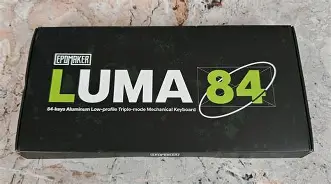
The Epomaker Luma84 is a compact mechanical keyboard intended for laptop users who want a more satisfying typing experience and more control over key mapping and lighting. The 84‑key layout (a compact variant between a 75% and a tenkeyless) strikes a balance between space savings and retention of essential keys like the arrow cluster and some navigation keys.
Strengths in practical use
In real‑world typing sessions — drafting long reports, coding, and responding to email — the Luma84 stands out for its stable plate, responsive switches (depending on the switches chosen), and compact footprint that fits next to a laptop without crowding the desk. The keyboard's programmability is helpful for laptop users who rely on custom shortcuts: remapping keys, creating layers for multimedia control, or using combination shortcuts can speed up repetitive tasks.
The Luma84 typically supports multiple connectivity modes (wired USB‑C and one or more Bluetooth profiles), which makes switching between a laptop and a phone or tablet straightforward. Battery life for any wireless mode will vary with RGB and usage; however, in wired mode it is just a reliable USB peripheral without battery concerns.
Limitations and considerations
A mechanical keyboard is a one‑time hardware purchase, but it requires the buyer to choose switches, keycap profile, and sometimes additional accessories (wrist rest, replacement keycaps) to achieve the ideal feel. Compact layouts have a learning curve for users coming from full‑size keyboards: some function combos and modifiers are layered, which may slow initial productivity.
Build and finish can vary between production runs and variants — buyers should inspect reviews for the specific Luma84 revision to confirm hot‑swap quality, stabilizer tuning, and software support for key mapping. For laptop users who travel frequently, a mechanical keyboard may add portability tradeoffs: it improves ergonomics, but it is larger and heavier than a laptop's built‑in keyboard.
Discover deals on Laptops & Computers — updated daily.
View Offers →Pros & cons — Epomaker Luma84
- Pros: Improved typing comfort and accuracy; compact but practical layout for laptop desks; programmability and multiple connectivity options; hot‑swap options allow switch customization.
- Cons: Learning curve for compact layout; quality can depend on revision and accessories; adds bulk compared to using a laptop keyboard alone.
Side‑by‑side comparison
| Category | Identityforce | Epomaker Luma84 |
|---|---|---|
| Purpose | Identity monitoring and restoration service | Physical mechanical keyboard for typing and productivity |
| Best for | People worried about identity theft, credit fraud, and account breaches | Laptop users seeking a better typing experience and custom key mapping |
| Cost model | Subscription (ongoing) | One‑time hardware purchase (plus optional accessories) |
| Real‑world benefit | Reduces recovery time and potential financial harm after fraud | Increases typing speed, comfort, and reduces fatigue during long sessions |
| Portability | Service is accessible via laptop/mobile — highly portable | Less portable than onboard keyboard; suitable for home/office or dedicated travel setup |
| Setup complexity | Sign up and provide personal data; configure alerts | Plug‑and‑play; may require switch/key remapping and possible software for macros |
| Maintenance | Monthly/annual payments, update account details as needed | Occasional firmware updates, cleaning, and switch/keycap swaps |
Who should buy which?
Choosing between Identityforce and the Epomaker Luma84 is not strictly mutually exclusive — both can add value to a laptop user's life. The pragmatic question is where the immediate need and budget priority lie.
- Choose Identityforce first if: the primary concern is financial risk, recent identity fraud, or managing the exposure of sensitive personal data online. Professionals who handle client data, those who travel frequently with laptops on public networks, or people who store extensive personal identifiers digitally benefit from continuous monitoring and access to restoration services.
- Choose Epomaker Luma84 first if: daily productivity and comfort are the main drivers. Writers, developers, spreadsheet-heavy analysts, and anyone who spends long hours typing on a laptop will notice immediate ergonomic and speed improvements from a well‑tuned mechanical keyboard.
- Both make sense when: a stable budget exists for both security and ergonomics. Protecting identity and improving typing efficiency are complementary: a secure digital life and a comfortable physical workspace reduce stress and increase productivity.
Buying guide — how to decide and what to look for
When evaluating either Identityforce or the Epomaker Luma84 (or both), the following practical checklist helps align features to needs.
For identity protection (Identityforce)
- Scope of monitoring: Verify whether the plan includes credit monitoring, Social Security number monitoring, dark web scans, and bank or account monitoring. More signals monitored means earlier detection in different scenarios.
- Restoration support: Check how restoration works: is there a dedicated case manager, what documentation is required, and how long the process typically takes? Timely support matters during live incidents.
- Insurance and limits: Understand the limits of recovery assistance and insurance coverage. Some plans include identity theft insurance that helps reimburse certain losses, but terms and caps vary.
- Family and multi‑user options: If protecting a household, compare family plan pricing and coverage to individual subscriptions.
- Privacy & data handling: Read the privacy policy. A monitoring service will handle extremely sensitive data — know how it is stored, shared, and protected.
- Trial and cancellation: Look for trial periods or money‑back guarantees, and understand cancellation and auto‑renewal terms.
For a mechanical keyboard (Epomaker Luma84)
- Layout and size: Confirm the Luma84 layout aligns with workflow needs. The 84‑key layout aims to save desk space while keeping essential keys; test the layout mentally against common shortcuts.
- Switch choice and hot‑swap: Determine whether the keyboard is hot‑swappable and which switches are available. Hot‑swap allows trying different switch types without soldering.
- Connectivity: Check wired vs wireless modes, Bluetooth profiles, and whether wired connection uses USB‑C. For frequent laptop switching, multi‑device Bluetooth pairing is useful.
- Programmability and software: Verify mapping tools, macro support, and whether the keyboard supports open firmware standards (QMK/VIA) for advanced customization.
- Build and accessories: Look for plate material, stabilizer quality, and available extras (wrist rest, keycap options). Quality stabilizers and a solid plate improve typing feel.
- Warranty and support: Review warranty length and manufacturer support channels for repairs or defective units.
Practical scenarios and recommendations
To make the decision actionable, here are scenarios that commonly arise for laptop users and a recommendation for each.
- Frequent traveler who logs into public Wi‑Fi: Identity protection should be prioritized. While a better keyboard improves comfort on the road, monitoring and restoration reduce the long‑term risk from exposed credentials.
- Writer or developer who works from a dedicated home office: The Epomaker Luma84 is a strong choice to accelerate productivity and reduce fatigue. Pair it with good desk ergonomics and the laptop as a secondary device.
- Household with teens and elderly relatives sharing online accounts: Identity monitoring for all family members is often the higher priority, because a single breach can affect multiple people. Choose a family plan if available.
- Hybrid worker who uses a laptop at the office and at home: Both products add value: a reliable keyboard for extended desk sessions and identity monitoring because work credentials and personal accounts mix on the same device.
Conclusion
Identityforce and the Epomaker Luma84 serve very different but complementary needs for laptop users. Identityforce provides an ongoing defensive layer against identity and account compromise, valuable for anyone with sensitive financial or personal data online. The Epomaker Luma84 is a hardware upgrade that materially improves typing comfort and productivity for people who use their laptops for writing, coding, or extensive keyboard work.
Which is "better" depends entirely on priorities: choose identity protection if preventing and recovering from fraud is the immediate concern; choose the Luma84 if improving day‑to‑day typing and workflow is the pressing need. For many users, the ideal setup includes both: strong digital safeguards paired with ergonomic, reliable input devices to make laptop time safer and more comfortable.